In this unit we studied the ideas of ecology and focused on the delicate balance that populations of predator and prey have on an ecosystem. In ecosystems, there are trophic levels, that distinguish the where energy is transferred up the food chain. Primary producers, such as plants, make the energy from the sun, which is then transferred when a primary consumer, such as a herbivore, eats the plant. Secondary consumers then eat the herbivore, transferring energy to a carnivore. The movement of energy continues up the food chain to the tertiary consumer and the quaternary consumer following one rule: only 10% of the energy produced at a level is passed on to the next level of the food chain. For example, if a plant produced 1,000,000 calories of energy, only 100,00 calories would be passed on to the primary consumer. By the time this energy moves all the way up to the tertiary consumer, that organism is only left with 100 calories.We also learned about how ecosystems reuse their resources through the water cycle, carbon cycle, nitrogen cycle, and phosphorus cycle. These cycles renew the nutrients in an environment. After natural disturbances, ecosystems can also "regenerate" through a process called sucession. Finally, after watching a movie about plastic bags called
Bag it! we learned about things we can do in our everyday lives to conserve resources and ultimately save biomes around the world.
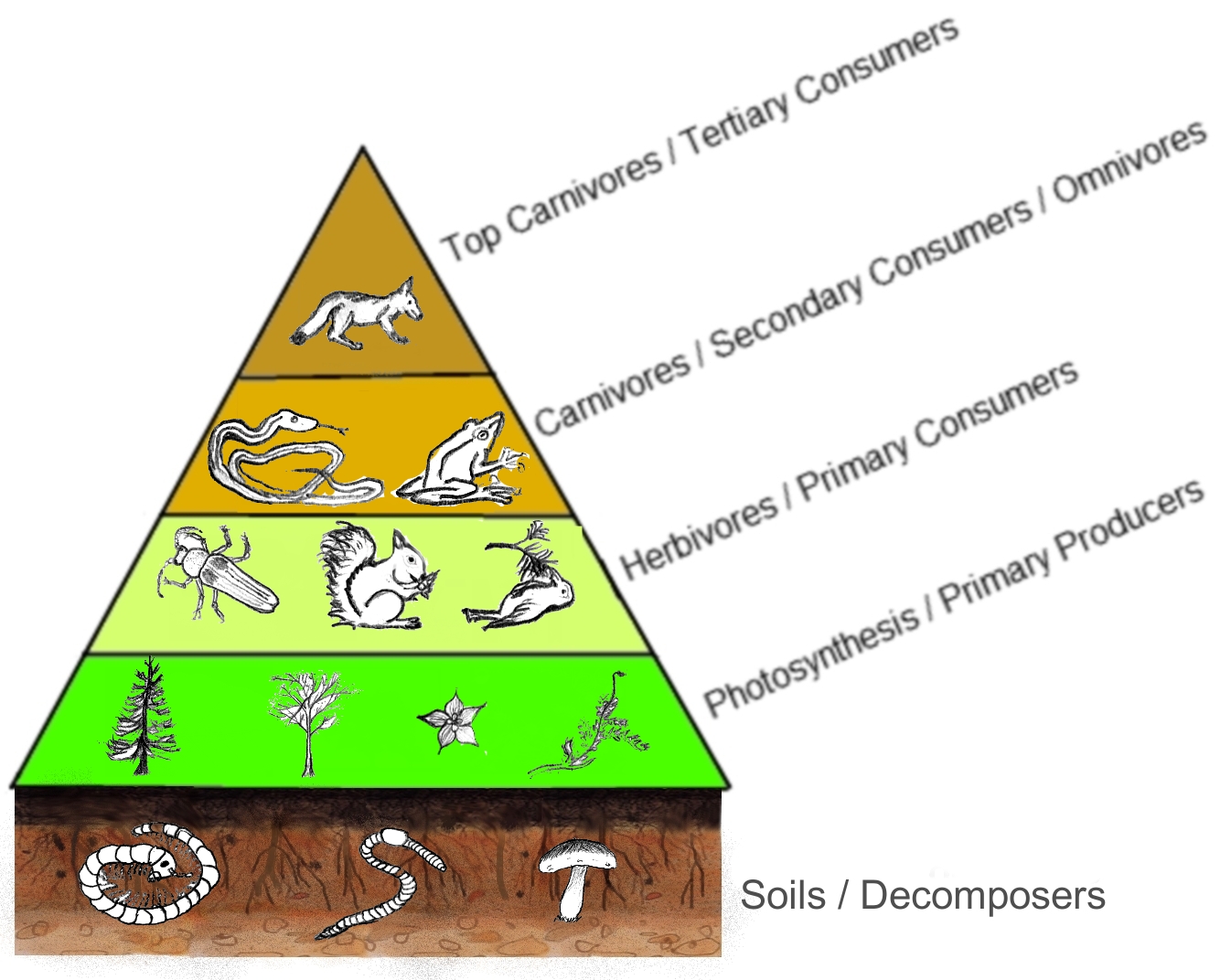 |
| <https://en.wikipedia.org/wiki/Food_web> |
I found it fascinating when presented with the idea that one day us humans will reach our carrying capacity. One day we will reach a point at which we will be fighting for resources and struggling to all survive together on this planet. I wonder if this will happen in a few hundred years or if it will occur in the near future.
 |
<https://en.wikipedia.org/wiki/Human_overpopulation>
|
For our conservation biologist project I think our biggest obstacle is that we did not have a set vision and determined goal from the beginning. We changed the plan for how we were going to make a video several times, even after filling out our project plan, and this was a hindrance to our motivation. After settling on the idea of a drawing video, we were fairly productive getting all the aspects we needed for the video finished in two class periods. What didn't work well was that we did not schedule enough time for editing the video in class and left one of our group members with all of the editing to do outside of class.
My dominant conflict style is a mix between assertive and passive. I can strengthen my assertive approach by being honest and direct when working in a group setting. Instead of allowing my emotions to bottle up inside, I can calmly address the problem to my group to improve both my experience and their experience.

